Review: A Shadow in Summer

Mar. 23rd, 2026 09:40 pm
[syndicated profile] eaglespath_feed

Review: A Shadow in Summer, by Daniel Abraham

Series: Long Price Quartet #1
Publisher: Tor
Copyright: March 2006
ISBN: 0-7653-1340-5
Format: Hardcover
Pages: 331

A Shadow in Summer is a high fantasy novel, the first of (as the name implies) a completed four-book series. Daniel Abraham is perhaps better known as half of the writing pair behind James S.A. Corey, author of the Expanse series. This was his first novel.

Otah was the sixth son of a Khai, sent like many of the unwanted later children of the powerful to learn the secrets of the andat and be trained as a poet. He learned his lessons well enough to reject the school and its teachings and walk away.

Amat Kyaan has worked her way up from nothing to become the senior overseer of the foreign Galtic House Wilsin in the sun-drenched port city of Saraykeht. Liat is her apprentice, distracted by young love. Maati is a new apprentice poet, having endured his training and sent to learn from Heshai how to eventually hold the andat Removing-The-Part-That-Continues, better known as Seedless. None of them know they will find themselves entangled in a plot to destroy the poet of Saraykeht and, through him, the city's most potent economic tool.

A poet in this world is not what we would think of a poet. They are, in essence, magical slave-drivers who capture the essence of an andat, a spirit embodying an idea that is coerced into the prison of volition and obedience by the poet. The andat Seedless, the embodiment of the concept of removing the spark of life, is central to the economic wealth of Saraykeht in a way that is startling in its simplicity: Seedless can remove the seeds from a warehouse full of cotton at a thought. This gives Saraykeht a massive productivity advantage in the cotton trade.

Seedless is also a powerful potential weapon. What he can do to cotton, he could as easily do to any other crop, or to people. The Galts are not fond of the independence and power of Saraykeht, but as long as the city controls a powerful andat, they do not dare to attack it directly. Indirectly, though... that's another matter.

This is one of those fantasy novels with meticulous and thoughtful world-building, careful and evocative prose, and a complex ensemble cast of interesting characters that the novel then attempts to make utterly miserable and complicit in their own misery. There should be a name for this style of writing. It's not tragedy because the ending is not tragic, precisely. It's not magic realism; the andats are openly magical, which makes this clearly high fantasy. But Abraham approaches the story from the type of realist frame that considers the pain and desperation of the characters to be more interesting than their ability to overcome challenges.

Amat starts the story as an admirable, sharp-witted expert manager, so her life is destroyed and she's subjected to sexual violence. Heshai loathes himself and veers between a tragic figure and a wastrel as the story systematically undermines opportunities for redemption. Maati is young and idealistic, so of course every character in the book sets out to crush his idealism under the weight of unforeseen consequences. There is a sad and depressing love triangle, because this is exactly the sort of book that has a sad and depressing love triangle. At the end of the novel, everyone who survives is older and wiser in the sense that some stories seem to think wisdom comes from the accumulation of trauma.

I find books like this so immensely frustrating because their merits are so clear. The world-building is careful and detailed in a way that includes economic systems, unlike so much fantasy. It is full of small, intriguing touches, such as the use of posture and gesture to communicate the emotional valence of one's words. Abraham understands the moral implications of poets and andats and the story tackles them head-on. The writing flows beautifully and gave me a strong sense of the city. I wanted to like this book for the obvious skill that went into it, and sometimes I even managed.

And yet, it's taken me three months to finish A Shadow in Summer because I simply do not want to spend this much time around miserable people. I would get through one or two chapters in a night and then wanted to read something happy or defiant or heroic, rather than watching slow-motion train wrecks intermixed with desperate attempts to navigate stifling layers of immoral systems. It's not that the story lacks a moral compass. The characters are sincerely trying to make the world a better place, with some success. It even delivers a happy ending of sorts. But so much of the journey was watching the lives of the characters fall apart.

I am completely unsurprised that some people loved this book. I'm still intrigued enough by the world-building that I'm half-tempted to try to read the sequel even after having to drag myself through this one. I had a similar reaction to Abraham's The Dragon's Path, though, so I think Abraham is just not for me. I may get back to the Expanse at some point, but having to drag myself through both of his solo novels I've tried, in two different series, probably indicates an incompatibility between author and reader. That's a shame, given the quality of the writing.

Followed by A Betrayal in Winter.

Content notes: Sexual and reproductive violence as significant plot elements.

Rating: 6 out of 10
I got nothing but poetry

Mar. 23rd, 2026 05:36 pm
kiya: (hawk)
[personal profile] kiya
I think this is a sign that my ADHD meds are also antidepressants?

Earth


none of us are built
to be this brave

the epics told the truth:
the inhuman weight
of necessary courage
makes monsters
of its warriors
(of its victims)

because

only monsters
can survive
valor

and not
lie beneath
mrissa: (Default)
[personal profile] mrissa
 

This is more partial even than usual, because I've had some download problems that I've since fixed. But we can let that filter out to the second quarter; time waits for etc. etc.

This Is Not a Love Poem, Alexandra Dawson (Reckoning)

I Met You On the Train, J. R. Dawson (Uncanny)

The Doorkeepers, A. T. Greenblatt (Uncanny)

Unsettled Nature, Jordan Kurella (Apex)

Straw Gold, Mari Ness (Small Wonders)

No Kings/No Soldiers, A.M. Tuomala (Uncanny)

Blade Through the Heart, Carrie Vaughn (Reactor)

Antediluvian, Rem Wigmore (Reckoning)

Bundle of Holding: Scion Origin

Mar. 23rd, 2026 03:02 pm
james_davis_nicoll: (Default)
[personal profile] james_davis_nicoll


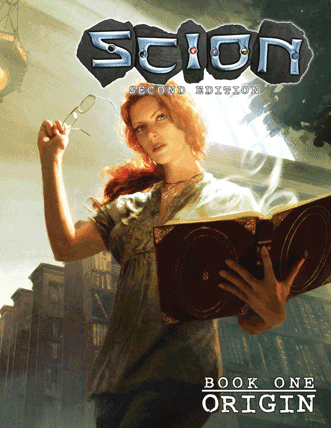
The 2024 Second Edition of Onyx Path Publishing's Scion, the tabletop roleplaying game about the children of gods discovering their birthright in the modern world.

Bundle of Holding: Scion Origin
siderea: (Default)
[personal profile] siderea
Boston locals! Blue Heron, an acapella early music ensemble, is throwing a three-day shindig to celebrate Guillaume de Machaut (died 1377), May 1-3, mostly involving talks about Machaut's works, talks about his lyrics, talks about the illuminations in the manuscripts his works come from, concerts of his music, and also a little ars subtilior tacked on the end just because.

More info https://www.blueheron.org/machaut-weekend/

Affordability note: They have a free ticket option as part of the "Card to Culture program" for people with EBT, WIC, and ConnectorCare(!) cards*, and a discounted "low cost" option.

Of note, the "Opening Festivities: Keynote, Performance & Sing-Along" on Friday night includes (emphasis mine):
a keynote talk by one of the world’s leading scholars of 14th-century music, Anne Stone (CUNY Graduate Center), performances of pieces in several of the genres represented in Machaut’s oeuvre, and a sing-along of the Kyrie from the Messe de Nostre Dame.
Which: huh. Huh. The Kyrie, huh? Wow. Now that is certainly a choice. I commend their bravery. Were I in better health, I would consider showing up just to be in on the shenanigans.

If you're curious what the Kyrie from Machaut's Messe de Nostre Dame sounds and looks like, here you go.

* There is no separate ConnectorCare card like there is for MassHealth. They mean your regular insurance card, which if it's a ConnectorCare plan should say so on it, or so the Mass Cultural Council, whose program it is, thinks.

Review: Dark Class

Mar. 22nd, 2026 09:31 pm
[syndicated profile] eaglespath_feed

Review: Dark Class, by Michelle Diener

Series: Class 5 #5
Publisher: Eclipse
Copyright: 2022
ISBN: 0-6454658-2-8
Format: Kindle
Pages: 349

Dark Class is the fifth novel (not counting the skippable novella) in Michelle Diener's Class 5 romantic science fiction series. As with the previous novels, this follows romance series conventions: There are new protagonists, but characters from the previous books make an appearance. It's helpful but not that necessary to remember the details of the previous books; the necessary background is explained enough to follow the story.

By now, series readers know the formula. Yet another Earth woman was secretly abducted by the Tecran, encounters a Class 5 ship, and finds a way to be surprisingly dangerous and politically destabilizing. This time, Ellie has been mostly unconscious since her abduction and awakes in a secret Tecran base after the Tecran have all been murdered. There is a Class 5 AI involved, but not a full ship; instead, Dark Class picks up (or, arguably, manufactures) a loose end from Dark Minds. Other than that break from the formula, you know what to expected by now: a hunky Grih, a tricky political standoff, a protective Class 5, a slow-burn romance, and a surprisingly capable protagonist who upends politics through plucky grit and refusal to tolerate poor treatment. Oh, and a new selection of salvaged clothing and weapons to make Ellie beautiful and surprisingly dangerous.

If you are this far into the series, you probably like the formula. That's my position. I don't care about the romance, but something about the prisoner to threat evolution of the kidnapped protagonists and the growing friendship with an AI makes me happy. This is not great literature, but it is reliably entertaining with a guaranteed victorious protagonist and happy ending, making it a comfortable break from more difficult books with emotionally wrenching scenes.

Dark Class is one of the better executions of the formula because it has long stretches of my favorite parts of these books: exploration of mostly-abandoned surroundings for neat gadgets while the AI and the protagonist slowly build a relationship of mutual respect. This book has bonus drones with minds of their own and an enigmatic alien spaceship that provides a fun mid-novel twist. The Tecran and the Grih repeatedly underestimate Ellie and are caught by surprise at dramatically satisfying moments. It's just fun to read, and I save this series for when I need that type of book.

As with the other books of the series, Diener's writing is serviceable but not great. She repeats herself, uses way too many paragraph breaks for emphasis, and is not going to win any literary awards for prose quality. The series is in the upper half of self-published works, and I've certainly read worse, but either the formula will click with you or it won't. If it doesn't, the prose is not going to salvage the book.

There is some development of the series plot, but it's mostly predictable fallout from Dark Matters. This book is mostly tactical and smaller in scale. I am a little curious where Diener is going with political developments, since the accumulated Earth women and Class 5 ships are in some danger of becoming a sort of shadow government through sheer military power, but I'm dubious this series will have enough political sophistication to dig into the implications. It's best enjoyed as small-scale episodic wish fulfillment for female protagonists, and that's good enough for me.

If you've read this far in the series, recommended; this is one of the stronger entries.

Followed by Collision Course, which breaks the title convention for the series.

Rating: 7 out of 10

Foxfibre [text/ag]

Mar. 23rd, 2026 01:01 am
siderea: (Default)
[personal profile] siderea
The YouTube algorithm pseudorandomly served me this, thereby answering the question I'd had on a distant back burner forever, "Hey, didn't I hear something about colored cotton cultivars once upon a time? Cotton that you didn't need to dye? Like back in the 90s?"

If you are a fellow fiber freak or interested in agriculture or organic crops or the underappreciated problem of sustainable clothing production, you may find this as fascinating as I did:

2026 Mar 7: Good Yarn Bad Knits [goodyarnbadknits YT]: "The Yarn That Almost Saved The World"

The Receipts Are Paywalled

Mar. 22nd, 2026 03:36 pm
elf: Life's a die, and then you bitch. (Gamer Geek)
[personal profile] elf
There is Drama going around in the indie TTRPG community. Some people accuse a game designer of being a jerk, a cheat (someone who doesn't pay contractors, not someone involved in relationship shenanigans), a liar, and weaponizing their fame to harass other people in the community.

Others say the above comments are nothing but hate-speech aimed at a person of a marginalized identity, and this person has written great works and brings creativity and fresh insights to the community at large.

I'd love to figure out which is true, or if they both have elements of truth.

The details are apparently covered in a Rascal article, possibly some posts at Medium, and of course, in multiple Discords. If I joined the right ones, I might be able to find out who actually said what. (I will not be joining any Discords over this.)

I can confirm:
• Creator in question has written some amazing stuff, not only much-lauded but also unique improvements to the TTRPG-sphere
• People I respect (but do not know personally) are calling aforementioned creator a scoundrel and abuser

My analysis )

Analyzing Anne Bonny's Timeline

Mar. 22nd, 2026 03:56 pm
[syndicated profile] alpennia_feed

Posted by Heather Rose Jones

Sunday, March 22, 2026 - 08:00

Even more than Mary Read's "origin story," the backstory given for Anne Bonny's birth is complicated, farcical, and implausible. Similarly to Read, she is given an excuse for later cross-dressing in having been disguised as a boy at an early age. (This motif shows up in other cross-dressing biographies and is a way of absolving the woman of deliberate gender transgression. But the details of Anne's pirate career include massive contradictions, especially around her gender presentation and the timelines of her supposed pregnancy(s). I mean, if your pirate boyfriend drops you off in Cuba to give birth to his baby, doesn't that rather imply that the entire crew would know you were a woman? Anyway...

Major category: 
Full citation: 

Johnson, Charles (pseudonym). 1724. A General History of the Pyrates: from their first rise and settlement in the Island of Providence, to the present time. With the remarkable actions and adventures of the two female pyrates Mary Read and Anne Bonny ... To which is added. A short abstract of the statute and civil law, in relation to pyracy. London: T. Warner.

Publication summary: 

A presentation and analysis of material related to Anne Bonny and Mary Read in the General History of the Pyrates, with additional material from journalistic and legal records.

Part 7: Analysis of the Anne Bonny Narrative

As done for Mary Read, here’s a highly speculative timeline structured around key events in the General History narrative, though there are fewer anchor points to specific dates. (Both women’s narratives make reference to things like the King’s Pardon, but in ways that don’t align well with the known timelines.) I’ve included some details from the 2nd edition which elaborate on events but don’t add substantial changes to the timeline. Many of the dates are vague estimates based on trying to coordinate descriptions in the General History to documented historic events. As before, I’ve converted years to the Gregorian system to avoid confusion for current readers.

  • Vague estimate early 1703?: Anne is born in Ireland. Calculated based on an estimated date and age for her marriage.
  • Vague estimate 1708: About 5 years after Anne is born, her father brings her into his household disguised as a boy to avoid acknowledging her.
  • Vague estimate 1710?: Anne’s father moves to Carolina with her and her mother. (Scots-Irish emigration to the colonies had begun in earnest a couple years earlier, so this date would be plausible.) Her father practices law, then turns merchant, then buys a plantation. (Quite the meteoric career!)
  • Vague estimate 1715?: Anne’s mother dies and she begins keeping house for her father.
  • Vague estimate early 1718?: Anne marries James Bonny and leaves Carolina for the Bahamas. If Anne was “very young” when she met Rackham, maybe a year later, then we might estimate that Anne is around 16 at this time, a not implausible age for marriage in that context.
  • November 24, 1718: Rackham is first mentioned as part of Captain Vane’s crew. This presumably marks a date when he had not yet encountered Anne.
  • Late 1719: Rackham returns to Bahama with a couple of captured ships.
  • May 1719: Rackham and crew go to Providence to take advantage of the General Pardon. (As the King’s Pardon deadline was the previous autumn, either it was extended or this event is fictitious. Rackham’s bio indicates the pardon happens before meeting Anne, but Anne’s bio indicates the pardon happens after her pregnancy.)
  • Shortly after May 1719: Anne’s husband James Bonny was one of Rackham’s pardoned crew. She meets Rackham. Rackham’s bio says Anne is “very young” at this time. (No James Bonny is in evidence in any of the trial records, but as the formal records only begin late in 1720 he could have quit the profession before that.) Rackham courts her and she agrees to go to sea with him wearing male clothing.
  • Date unclear: At some point after this is the erotic encounter with Mary Read who has also joined the crew, but the sequence can’t be pinned down.
  • Approximately February 1720: “After some time” Anne becomes pregnant and is left in the care of friends in Cuba. She has the child then rejoins Rackham. In Rackham’s bio it says he spends “a considerable time” in Cuba where he “kept a little kind of a family.” If Anne became pregnant almost immediately after taking up with Rackham, then the earliest date of the birth would be around this time.
  • Date unclear: Rackham joins a privateer ship to attack the Spanish to gain money to support Anne. Then he returns to Providence and lives there with Anne, but the chronology of various events around this is unclear.
  • Date unclear: Rackham and Anne leave Providence due to official disapproval of Anne’s loose morals. They seize a sloop belonging to John Haman to return to piracy. (Note: the trial records make no mention of a John Haman and this appears to be well earlier than the documented attacks in the trial records.)
  • Late July 1720: The earliest hypothetical date that Anne could have become pregnant if she was, indeed, pregnant during her trial but had not yet given birth. (The claimed pregnancy could easily have been fictitious.)
  • August 1720: Rackham returns to piracy after spending time ashore.
  • September 1, 1720 (from the trial record): Anne agrees to turn pirate with Rackham. (This need not be in conflict with the General History’s much earlier date of her piratical career if it’s simply an arbitrary date used by the court.)
  • September-October 1720 (from the trial record): Various acts of piracy by the Rackham crew, culminating in their capture in late October.
  • November 28, 1720 (from the trial record): Anne Bonny is tried for piracy.

As with the “origin story” for Mary Read, the elaborate soap-opera narrative around Anne’s birth not only includes details that would only be known to the participants, but reports of the secret actions and interior states of mind of people who were dead by the time of Anne’s trial for piracy. The narrative about Anne’s mother, the stolen spoons, the bed-switching shenanigans, and the consequences involving inheritance take up three times more space than the part of the narrative about Anne’s piracy career. As with Mary’s origin story, it’s exactly the sort of sexual farce that was popular on stage and in novels at the time.

When we ask “how could Johnson hypothetically have learned this story, if we assume it was true?” we need to consider it in parts. The wife (who is never named—in fact the only name other than Anne’s mentioned in this part of the narrative is that of Anne’s mother Mary, which is given in quoted speech) had access to her own beliefs about what happened, to what the servant’s (Anne’s mother’s) suitor reported to her about his little “joke” with the spoons, and was presumably the sole person who knew about her anonymous tryst with her own husband, by which he suspected her of adultery. (She could hypothetically have explained it to her mother-in-law, but if so, then why wouldn’t that knowledge have been used to leverage a reconciliation? And then the mother-in-law died, so she wasn’t a possible reporter at a later date.) The wife disappears from the story when Anne’s father leaves for Carolina. In order to be Johnson’s information source, he would have needed to track her down. As no specific details of the names or town are recorded, this possibility seems tenuous. (Was “Bonny” Anne’s married name or maiden name? If the former, that would add another layer of difficulty in tracking down her antecedents.)

Anne’s mother (the servant) died after the move to Carolina, and would have known the details of her own actions around the theft of the spoons. Did she relate those details to Anne’s father? Or to Anne herself? Possibly, although, once more, the detail about the wife using the servant’s bed the night of the anonymous tryst would have changed the circumstances if made known to the father, and that was something the servant did know. But any conduit for the servant’s knowledge would necessarily lead through another person.

Could Johnson have tracked down Anne’s father in Carolina and interviewed him for details? The narrative claims “Her Father was known to a great many Gentlemen, Planters of Jamaica, who had dealt with him, and among whom he had a good Reputation; and some of them, who had been in Carolina, remember’d to have seen her in his House; wherefore they were inclined to shew her Favour, but the Action of leaving her Husband was an ugly Circumstance against her.” If we accept this as true, then an informant in Jamaica could potentially have tracked down the father.

Let’s talk about Anne’s father for a bit. In Carolina he’s said to have practiced law and then become a merchant and owner of a “considerable plantation” who had dealings with “a great many gentlemen, planters of Jamaica.” This would seem to make him a man of considerable social standing who presumably would be mentioned in any number of records in Carolina. Those who have researched the question (as quoted in her Wikipedia entry) have found no trace of any man who fits this description.

Could Anne herself have been the informant for the parts of her narrative that either she experienced directly or that might have been communicated to her by her mother or father? We can’t entirely exclude this possibility, as her ultimate fate is not known to be recorded. The General History concludes her narrative with “She was continued in Prison, to the Time of her lying in, and afterwards reprieved from Time to Time; but what is become of her since, we cannot tell; only this we know, that she was not executed.” If she had been a direct informant, would this not have been mentioned, given that other intermediate sources of information are cited in other biographies in the General History? A direct interview with the condemned pirate would surely have been a newsworthy boast!

The details of Anne’s initial marriage, her subsequent relationship with Rackham, her reported pregnancy during that period (with no subsequent mention of the fate of the child), and her demeanor as a pirate are all sketched very briefly. Nor is the supposed erotic encounter with Mary Read mentioned at all in Anne’s part of the narrative, though there is a reference to other details “already hinted in the Story of Mary Read.”

Taken all together, we once again have a narrative that looks like a cobbling together of either existing fictional narratives or ones invented in the style of popular farce, with a bare smattering tying it in to the facts of the trial documents at the end.

This completes the analysis of the material belonging to the single volume of the first edition of the General History. Further information in the following section continues to raise questions of how and from whom the new information was sourced, if one treats it as factual.

Time period: 
Event / person: 
james_davis_nicoll: (Default)
[personal profile] james_davis_nicoll


One determined man struggles to save humanity from the mutant scheme to avert doomsday.

Ring Around the Sun by Clifford D. Simak

"Dum superbit impius" [music, pols]

Mar. 22nd, 2026 12:31 am
siderea: (Default)
[personal profile] siderea
[requires both audio and video]

Jonasquin on YT (previously) has written a wholly original motet in the 16th century style after Desprez upon the cantus firmus "Seven Nations Army", for the words of Psalm 10, verses 2, 3, 7-11.

Comment would be superfluous.

2026 Mar 20: Jonasquin YT: "A 16th century motet for the US President"


Click through to the video on YT to see the translation in the description.

Really, really winning.

Mar. 21st, 2026 06:54 pm
kiya: (headdesk)
[personal profile] kiya

PSA


Did you know
Mental health is worse
In the population
We're trying to kill?

It's why
They can't be allowed
To be
Like that.

It's for their own good,
You see.
These laws
Are protection.

Left to their own devices
They make bad choices,
Which lead to
Negative outcomes,
Like living.

Depression is winning today

Mar. 21st, 2026 02:30 pm
kiya: (jade)
[personal profile] kiya

Rat


The poem says
Hope is a sewer rat
Adapted
For survival

Despite the plague
And the filth
And the hate

And I
Got the t-shirt
The one with the rats
That says
"You will not
Exterminate
Us"

That they
Resurrected
For rats
Like me

But I am
Sick
Of gnawing
A way
Out

And so tired
Of the stench.
[syndicated profile] alpennia_feed

Posted by Heather Rose Jones

Saturday, March 21, 2026 - 07:00

Lesbian Historic Motif Podcast - Episode 338 - Anne Bonny, Mary Read, and Other Pirates - transcript

(Originally aired 2026/03/21)

I don’t know if anyone else has noticed, but pirate novels have been getting rather popular in lesbian and sapphic fiction. Going by my spreadsheet (which isn’t necessarily complete), and searching on cover copy that includes the word “pirate” or “piracy,” after a long period with only 1 to 3 pirate books each year, the numbers started climbing in 2022 and hit 16 titles in 2025. While maybe half fall within the “golden age of piracy” stretching from the late 17th century to the mid 18th, and set primarily in and around the Caribbean, another solid chunk have stretched that era into the 19th century or exist in the nebulous, timeless “Pirate Era” of Hollywood movies.

There were, of course, female pirates in history, many of whom would make excellent subjects for historical fiction. From the bloodthirsty Jeanne de Clisson in 14th century Brittany, to Gráinne ní Mháille in 16th century Ireland, to the powerful commander of the Red Flag Fleet in 19th century China, Zheng Yi Sao, there are plenty of colorful figures to provide inspiration. The Wikipedia article on Women in Piracy [https://en.wikipedia.org/wiki/Women_in_piracy] has extensive listings with reliable assessments of historicity. Rather less reliable is a popular book titled Women Pirates and the Politics of the Jolly Roger by Ulrike Klausmann, Marion Meinzerin, and Gabriel Kuhn which aims more at entertainment and speculation.

Now, it isn’t quite fair to blame Hollywood for the familiar version of the Golden Age of Piracy. Indeed, there is a long tradition of pirate stories being based primarily on a fantasy version of history, invented by someone who was most likely already a prolific novelist, who gave the public what they wanted in the form of elaborate, bloody, and largely fictionalized stories of real-life pirates…and some pirates who never existed in the first place. And at the center of that fiction are two real-life women pirates: Anne Bonny and Mary Read. Bonny and Read are the darlings of the lesbian pirate set, but almost everything that makes them of interest—everything except that they were women and were pirates—is fictitious.

The fantasy version of the Golden Age of Piracy was the creation of a man writing under the pen name “Captain Charles Johnson,” but who many scholars believe to have been Daniel Defoe, author of Robinson Crusoe, Moll Flanders, A Journal of the Plague Year, and Memoirs of a Cavalier. The full title of the work—following the expansive fashion of the times—is A General History of the Pyrates: from their first rise and settlement in the Island of Providence, to the present time. With the remarkable actions and adventures of the two female pyrates Mary Read and Anne Bonny ... To which is added. A short abstract of the statute and civil law, in relation to pyracy. Whew. The first edition—published early in 1724—covered 16 pirate captains (with Bonny and Read’s stories included under Captain Rackham) and was so popular that a second edition was published a few months later, which included a second volume with an additional 15 biographies and further details about the people covered in the first volume. Supposedly this second volume was aided by contributions of material from correspondents who had access to first-hand knowledge, but it includes several figures who are entirely invented. And like the material in the first volume, it includes detailed personal histories with content that could not plausibly have been obtained under the conditions in which it was written.

The vast majority of the material about Bonny and Read falls in this category, included detailed histories of their childhood and early careers that could not have been available to the supposed author, whoever he was. If you want to read the complete original material and an analysis of its possible veracity, there’s a multi-part series of posts on the Lesbian Historic Motif Project blog that will be linked in the show notes.

But let’s step back for a moment. Anne Bonny and Mary Read were genuine historical figures. Their presence and activities among the crew of Jack Rackham during acts of piracy in the later part of 1720 are documented in contemporary legal records and newspapers, as is their trial for piracy—complete with detailed eyewitness accounts—from an official record published by the government of Jamaica, covering a whole series of piracy trials in the later part of 1720 and early 1721 and published sometime around May 1721.

The trial records and eyewitness statements document that Bonny and Read participated enthusiastically and violently in acts of piracy, that they did so while wearing masculine clothing, that they were found guilty and sentenced to hang, and that they successfully delayed execution by claiming pregnancy. (This was a common tactic for female defendants, as execution would be put off until either the child was born or it was demonstrated the claim was not true, and the delay could allow time for appeals or clemency.) In contrast to the General History’s claim that Bonny and Read were successfully disguised as men during their time on ship—their true sex unknown to anyone except each other and Captain Rackham—the eyewitnesses indicated it was perfectly obvious they were women, and furthermore that they only dressed in masculine clothing during combat, while wearing skirts at other times. But I get a little ahead of myself.

The myth of “lesbian pirates” derives from one episode in the General History that depends entirely on the motif of a completely successful gender disguise. I’ll quote the passage in full. It comes during the biography of Mary Read.

Her Sex was not so much as suspected by any Person on Board, till Anne Bonny, who was not altogether so reserved in point of Chastity, took a particular liking to her; in short, Anne Bonny took her for a handsome young Fellow, and for some Reasons best known to herself, first discovered her Sex to Mary Read; Mary Read knowing what she would be at, and being very sensible of her own Incapacity that Way, was forced to come to a right Understanding with her, and so to the great Disappointment of Anne Bonny, she let her know she was a Woman also; but this Intimacy so disturb’d Captain Rackam, who was the Lover and Gallant of Anne Bonny, that he grew furiously jealous, so that he told Anne Bonny, he would cut her new Lover’s Throat, therefore, to quiet him, she let him into the Secret also.

Now, it’s an important bit of context that gender-disguise adventures were a popular staple of 17th and 18th century popular culture, and there’s a common motif of a women in male disguise on shipboard falling into sexual adventures because a woman (usually the captain’s wife) is attracted to someone she thinks is a handsome young man. While this motif flirts with the idea of same-sex relations, it’s done with plausible deniability as the desiring person believes they are pursuing an opposite-sex encounter, and the revelation of the underlying sex immediately puts an end to the desire.

That said, the historic record does include a good number of successful gender disguise biographies (and that’s only the ones we know about because they failed at some later point), including ones where a disguised woman either initiates or goes along with a romantic or sexual relationship with a woman, either to support the disguise or from desire—we can’t always tell.

So the fictional version of Bonny and Read’s encounter—that they were both successfully passing as men, and engaged in a same-sex flirtation within that context—is quite plausible. But the totality of the evidence for the real Bonny and Read’s lives makes it clear that no such encounter happened between them. They were not successfully passing as men—they weren’t even trying to. Even within the narratives offered by the General History—the only source for the slightest hint of sapphic attraction—they are both depicted as exclusively heterosexual, both pursuing sexual relationships with fellow male pirates.

So how did Bonny and Read end up becoming the darlings of the lesbian pirate movement? For that, we need to trace the history of the genre. Historian Helen Rodriguez is joining the podcast to talk about the pop culture afterlife of Bonny and Read, and especially how they became lesbian icons.

[A transcript of the interview will be included when available.]

Show Notes

In this episode we talk about:

  • Female pirates
  • Anne Bonny and Mary Read in the General History of the Pyrates
  • The motif of “lesbian Bonny & Read”
  • Bonny and Read in lesbian historical fiction
  • Sources mentioned
  • This topic is discussed in one or more entries of the Lesbian Historic Motif Project here:
  • Works mentioned by Helen Rodriguez:
    • The History and Lives of Notorious Pirates (1735)
    • The Extraordinary Adventures and Daring Exploits of Captain Henry Morgan (1813)
    • The Naval History of the United States by Willis J. Abbott (1896)
    • The Buccaneers and their Reign of Terror by C.M. Stevens (1899)
    • The Homosexuality of Men and Women by Magnus Hirschfield (1920)
    • ”Anne Bonny & Mary Read: They Killed Pricks” by Susan Baker in The Furies: Lesbian/Feminist Monthly Vol. 1, issue 6 (August 1972)
    • Mistress of the Seas (novel) by John Carlova (1964)
    • Forgotten Women ed. By Nancy M[???] (couldn’t identify this book)
    • The Women Pirates (play) by Steve Gooch (
    • Mary Read, Buccaneer (novel) by Philip Rush (1945)
    • Beneath the Black Flag by David Cordingly
    • Kingston by Starlight (novel) by Christopher John Farley
    • Black Sails (tv series)
    • Assassin’s Creed IV: Black Flag (video game)
    • The Pirates of Neverland (video game)
    • Our Flag Means Death (tv series)
    • Hellcats (podcast fiction)

Links to the Lesbian Historic Motif Project Online

Links to Heather Online

Links to Helen Rodriguez Online

Major category: 
james_davis_nicoll: (Default)
[personal profile] james_davis_nicoll


13 books new to me, and save for one mystery, all fantasy. Man, fantasy is just eating SF's lunch. Not that that will be reflected in what I actually review.

Books Received, March 14 — March 20


Poll #34393 Books Received, March 14 — March 20
Open to: Registered Users, detailed results viewable to: All, participants: 39


Which of these look interesting?

View Answers

The Siren by Tomi Adeyemi (October 2026)
8 (20.5%)

Twined Fates: Tangled Hearts, Book Three by K. Bromberg (October 2026)
0 (0.0%)

Light of the Song by Joyce Ch’Ng (September 2025)
8 (20.5%)

The First Flame by Lily Berlin Dodd (November 2026)
1 (2.6%)

A Destiny So Cruel by Amanda Foody & C. L. Herman (November 2026)
1 (2.6%)

Find Me Where It Ends by Cassandra Khaw (October 2026)
12 (30.8%)

Bad Company by Sara Paretsky (November 2026)
7 (17.9%)

The Kings’ List by Jade Presley (May 2026)
2 (5.1%)

My Unfamiliar by Mara Rutherford (December 2026)
8 (20.5%)

Ghosted by Talia Tucker (November 2026)
3 (7.7%)

The Mystic and the Missing Girl by Vikki Vansickle (September 2026)
6 (15.4%)

The Scarlet Ball by Nghi Vo (October 2026)
12 (30.8%)

Chosen Son by Adrienne Young (November 2026)
2 (5.1%)

Some other option (see comments)
0 (0.0%)

Cats!
31 (79.5%)

The Missing Middle

Mar. 21st, 2026 12:13 am
elf: We have met the enemy and he is us. (Met the enemy)
[personal profile] elf
Found a nice gaming article on Bluesky (Three Tiers of RPG Publishing), which led me to another article, which I found insightful and clever (and a bit sad, as accurate talk about economics these days tends to be), and then hit the bit that blew my mind.

They Killed Normal and Called It Progress: "Julia Roberts, Applebee's, Bandcamp, your manager, and the death of everything in between. (Also, Sweetgreen is the A24 of dining and I will die on this hill.)"
Have you noticed that the middle is gone from everything? Restaurants, companies, careers, music, retail, the economy itself. What replaced it is a barbell: one enormous weight on each end, nothing in the center, and most of us trying not to get crushed by the bar.

And the replacement does look better every single time, I grant you that. The A24 film is better than the $40 million adult drama from 2007, yeah, we can all agree on that. The Sweetgreen bowl is better than the Applebee’s chicken parm, sure. Your favorite Substack is sharper than the mid-list magazine that folded in 2019. Every replacement is a genuine upgrade. But every replacement serves fewer and fewer people.
That's not the mind-blowing part. That's the thesis, the baseline, the part that he spends half of the ~3000 word essay explaining, giving examples of, making neat comparisons across different industries.

It's amazing that it doesn't get boring because it truly is the same damn pattern )

The cost of literacy [medieval hist]

Mar. 20th, 2026 10:33 pm
siderea: (Default)
[personal profile] siderea
I knew that other contemporaneous cultures than those of Europe had unfathomably higher numbers of books than Europeans did, but I didn't know about this in retrospect obvious reason why:

2026 Mar 19: Dwarkesh Patel feat. Ada Palmer [DwarkeshPatel YT]: "Why Medieval Books Cost as Much as a House" (1 min, 7 sec):


Without papyrus, what you're writing on is a dead sheep. And if you think of the price of a head of lettuce and the price of a leather jacket, you're understanding the difference between a sheet of papyrus and writing on a dead sheep. So every page of a medieval book is as expensive as that much of a leather jacket. And a medieval book hand written costs as much as a house.

And so to have a library is to be not just rich but mega rich. So only the wealthiest cities contain anybody who has a library. The great library of the University of Paris, the library from Europe's perspective, has 600 books.

There's definitely more than 600 books in this room. Every kiosk at an airport selling Dan Brown novels has more than 600 books. This is nothing.

And at the same time as that, in the Middle East, sultans have libraries of over a thousand books or 5,000 books. There are libraries in Sub-Saharan Africa with thousands of books.* There are libraries in China with thousands of books. Because they in China have cheap paper and rice paper. The Middle East has papyrus.

Europe, and only Europe, is writing on a leather jacket.
* Three hundred thousand. It's been thirteen years and I am still not remotely over that fact. Every time I encounter it anew, my SCA persona gets acrophobic trying to imagine a library that big and has to sit down and put her head between her knees so she doesn't pass out.
siderea: (Default)
[personal profile] siderea
The previously expected ICE enforcement surge never materialized. Curious.

I wonder if this just means they're short-staffed. Or perhaps distracted.

(I also wonder if somebody made a judgment call not to try what they did in MN in MA, but have largely rejected the notion. It would not be to anybody's advantage if they did, on either side, but I'm not seeing a lot of good judgment in evidence anywhere.)

Medicare advantage, again

Mar. 20th, 2026 05:48 pm
redbird: closeup of me drinking tea, in a friend's kitchen (Default)
[personal profile] redbird
It turns out that changing Medicare Advantage plans is not costing me significant money: it looks as though the money I paid for prescriptions at the beginning of the year counts for a calendar-year maximum, even though I switched plans. I ordered another dose of Kesimpta on Wednesday, and they aren't charging me for it. As I said to [personal profile] cattitude and [personal profile] adrian_turtle, I'm glad that I could have afforded to pay that twice, but there are plenty of things I'd rather do with the money.

As a side note, this plan will pay for $65 per quarter of over-the-counter medications and some related things. I used part of this quarter's today to order Mucinex, Imodium, and an under-the-tongue digital fever thermometer. I think I can get them to pay for non-emergency transportation to medical appointments, and I should check what dental coverage I have.
Page generated Mar. 24th, 2026 09:21 am
Powered by Dreamwidth Studios